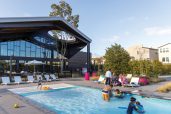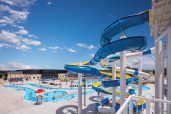
In the 17th and 18th centuries, herders in the Alps used long, straight wooden horns called alphorns to signal across valleys, its low, resonate tone carrying for miles. True to its Germanic heritage, Bavarian Inn Lodge signaled the arrival of Michigan’s biggest indoor waterpark with the alphorn’s modern-day equivalent: social media.
In the months leading to Bavarian Blast Waterpark’s early-Spring debut, its marketing team posted twice daily, mixing limited offers with trend-based Reels/TikToks, staff features, and POV attraction clips.
They also built an influencer program, in which it would comp lodge stays and park access in exchange for posts. That strategy proved particularly effective: Thirty influencers visited between March and August, generating scores of posts that reached the resort’s target market — families with children.
Bavarian’s marketing director, Kelly Martin, knew that identifying the right creators would determine the strategy’s success. Her team handpicked family-focused Michigan influencers who could authentically showcase all-ages fun, from toddler splash zones to overnight stays, so their followers would see a trip they’d actually book.
Now influencers are reaching out to her, but Martin remains selective. “You may have a million followers, but if your audience is there for fashion and not family experiences in Michigan, it’s not going to make sense for us,” she explains.
The team also placed a keen focus on SEO, and the results speak for themselves: Searches for “Michigan indoor waterpark” landed parents squarely in the booking flow. “We managed to hit the No. 1 spot [in search results] in less than six months,” Martin says. “So, by the time we opened, we were right there.”
Character-driven campaign
For the broad campaign, the team smartly employed a wealth of fun visuals.
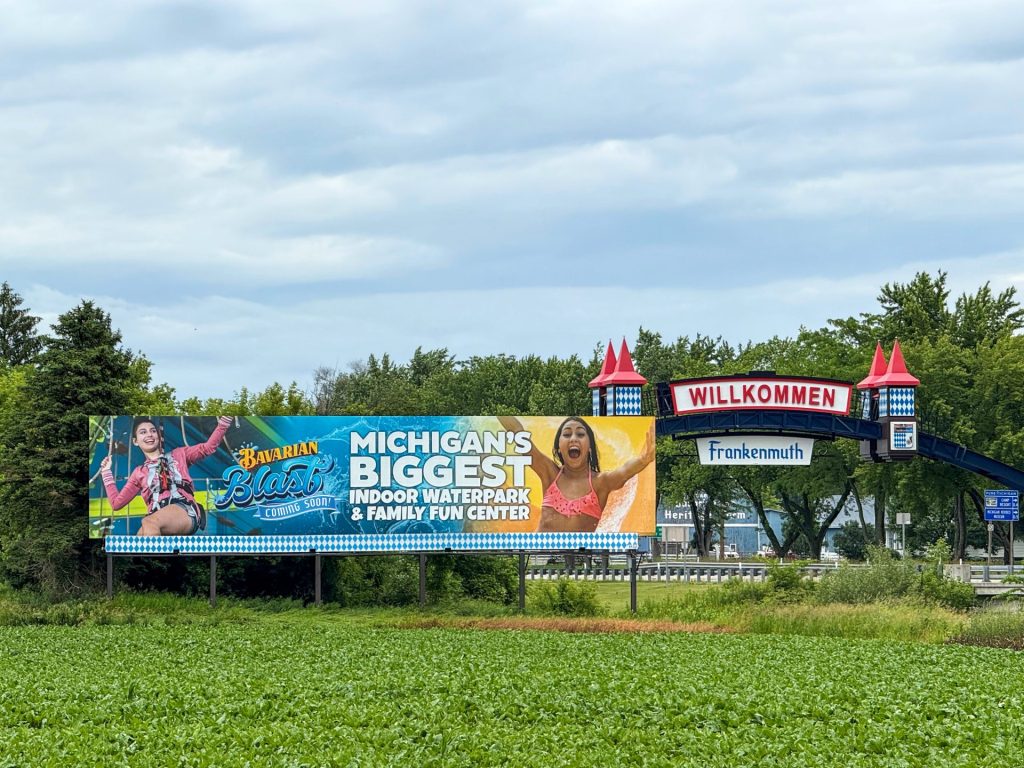
The park’s mascot, Willie the Dragon, featured prominently, along with his growing roster of friends. Off-property, a 3D billboard turned heads with its slide that appears to bursting from the frame. A giant entrance window cling set the tone on arrival. Those same characters presented on-site photo ops and retail plush, closing the loop between awareness and memory.
Signaling that the park indeed caters to all ages, the Bavarian Blast’s swim-up bar also got its time in the spotlight. After all, this would be Michigan’s first swim-up bar — and it took a certain amount of orchestrating. The Great Lake State had banned these amenities from commercial settings, so the lodge’s president worked with state legislators to change that.
Targeting for the campaign mirrored the waterpark’s dual audience. To attract overnight customers, the team framed the park as a weekend getaway, getting the message across through streaming and cable buys that focused on Metro Detroit, extending into Grand Rapids and Lansing. To generate day-pass business, they narrowed the focus to a 30–40-mile drive radius, using localized creative that nudged families to “grab a day pass” and come now. Placements in print and radio still earned a role for time-bound events such as New Year’s.
Locally, “Community Nights” welcomed neighboring towns at a discount, generating approximately $30,000 in added day-pass revenue and enough goodwill to expand into a fall series. The message was simple: This is your park, too.
The results came quickly. In the first several weeks, Bavarian Blast drew more than 50,000 guests, exceeded 10,000 day-pass visitors, surpassed $1 million in waterpark revenue, and helped lift Bavarian Inn Lodge occupancy by 25 percent — all on an annual marketing budget of about $250,000. The lesson isn’t mysterious. Pick signals that carry — creators who truly fit, characters that travel from billboard to phone screen to gift shop, daily content that shows rather than tells — and aim them with discipline.