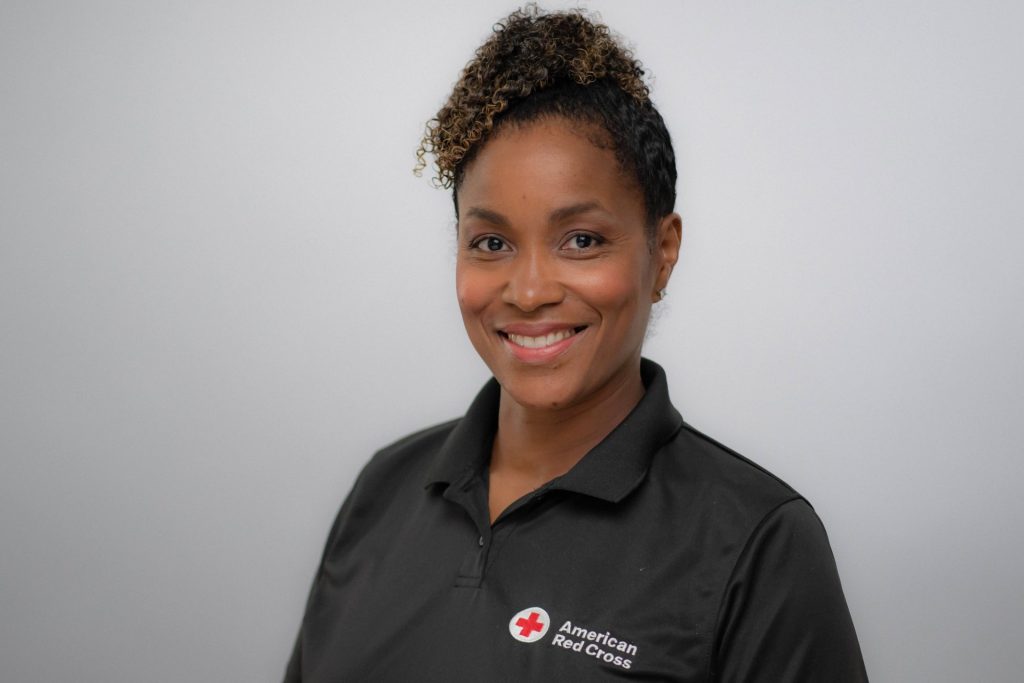
Angela Beale-Tawfeeq knows the life-changing effects of access to aquatic facilities and the ability to swim on both individuals and communities. Her early experiences in the pool opened doors for her and shaped her professional goals.
Beale-Tawfeeq has spent decades working at the intersection of water safety, public health, and youth
development. Her career spans competitive swimming, lifeguarding, K-12 education, higher education, and national leadership roles with organizations such as the American Red Cross and Diversity in Aquatics. She has also worked on the National Water Safety Action Plan and played a role in the New Jersey State Swim Safe Alliance, which created the first strategic water safety action plan for the state and the third in the United States.
PUBLIC POOLS OPEN DOORS
Like many in the industry, Beale-Tawfeeq started her aquatics journey at a young age. She grew up in North Philadelphia in the 1980s with access to public pool programming through Philadelphia Parks and Recreation. One of her favorite lines is “in North Philadelphia, born and raised, in the swimming pool is where I spent most of my days.”
It was there that Beale-Tawfeeq was introduced to competitive swimming by coach Jim Ellis, whose work later inspired the film Pride. At the time, Ellis, one of the most influential coaches in USA Swimming, was using aquatics as a means to help African American youth and any youth in the community who needed it.
For Beale-Tawfeeq, swimming opened doors to lifeguarding, scholarships, and higher education. She earned a swimming scholarship to Florida A&M University before transferring to Howard University, where she competed and served as team captain. Along the way, aquatics supported her academically and professionally through lifeguarding jobs with the Red Cross.
As Beale-Tawfeeq pursued more education and career opportunities, she created ways to give back to the community. She wrote a dissertation on health and physical education at Florida State University. The dissertation was one of the first to examine the impact of aquatics on K-12 education.
Beale-Tawfeeq holds several degrees: a PhD in Physical Education; a Master of Public Health in Community Health; a Masters in Therapeutic Recreation; and a Bachelors in English and Secondary Education. She currently serves as an associate professor at Rowan University in Glassboro, N.J.
For some communities, she says, access to swim lessons means more than learning skills in the water — it also can lead to lifechanging experiences.
APPROACHING WATER SAFETY WITH CULTURAL SENSITIVITY
Since 2013, Beale-Tawfeeq has served on the American Red Cross Scientific Advisory Council, Aquatic Sub Council. She also serves as a board member and director of education and research for Diversity in Aquatics (DIA), a non-profit dedicated to promoting and supporting water safety and aquatic activities
for vulnerable populations.
“In terms of the African American community, the Black and Brown community, sometimes you have to approach water safety or access differently,” she says.
Beale-Tawfeeq’s approach to water safety and entry into aquatic activities among African American, Black and Brown, Alaskan Native, and Indigenous people involves recognizing the role of historical barriers, social determinants of health, and generational trauma.
“You have to meet people where they are,” she says. “You can’t come in telling them what
they need.”
That could mean considering childcare needs, transportation challenges, and family responsibilities. The Red Cross could provide information and access, but Beale-Tawfeeq explains that communities might not be ready to receive it because of perceptions, lack of access due to finances, or family
trauma and fears.
Her ties to the Red Cross and DIA allow her to bring resources from both organizations together.
Examples include joining communities for learn-to-swim programs at historically Black universities or HBCUs, which can serve as a community resource.
Through her teaching, research, and work with organizations, she continues to build connections between aquatics professionals, educators, and communities — always with the goal of making water safer and more accessible for everyone.