MCCS Okinawa Semper Fit
Okinawa Prefecture, Japan
CATEGORY: Targeted programming
ACCOMPLISHMENT: Building a facility and schedule that serve military families’ everyday needs while preparing active-duty Marines for service
While it could be argued that Marine Corps Community Services (MCCS) Aquatics facilities serve a specific community, they must fulfill a diverse set of needs.
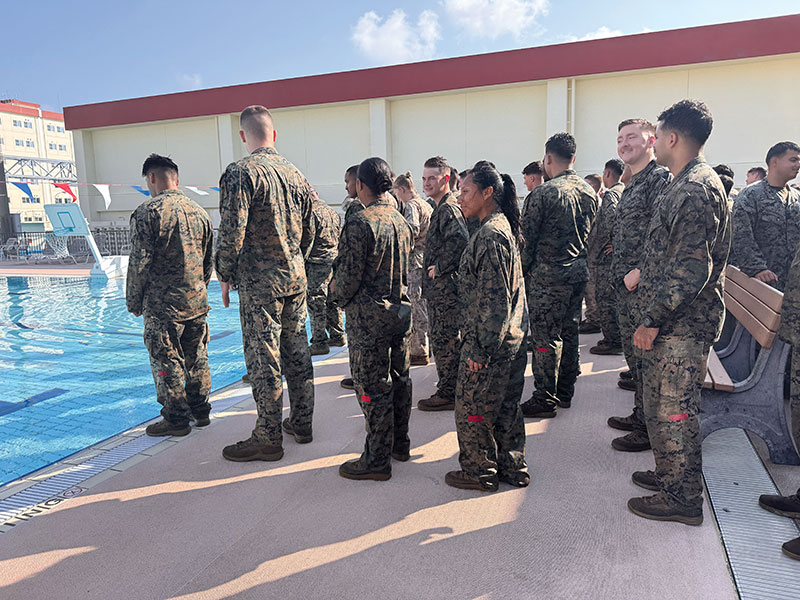
Not only do they host training and exercises for active-duty service members, but they also provide a setting where military families, children, retirees, and other authorized civilians can reap the benefits of water. In answer, programming spans competitive, fitness, and recreational swimming; youth and family programming; and mission-focused aquatic training. For the military members themselves, the pools play host to scuba certification courses and military-focused water training such as Swim Survival Skills Training and other programs to fulfill the Corps’ aquatic training requirements each year.
“What makes the programming distinctive is the ability to serve these populations simultaneously,” says Jennifer Ayers-Millar, aquatics program manager for MCCS Okinawa. “A facility may support Marine Corps training in one part of the day, provide individualized instruction to an active-duty member struggling with swimming, host youth lessons or swim team practice, and welcome families for recreational swimming later that same day.”
A rare clientele
Despite this diverse population, the facility is, at its core, meant to train and prepare active-duty military for their service.
“Ultimately, our goal is to increase the survivability of our Marines,” Ayers-Millar says.
The programming and facilities had to be designed to take on this unique audience.
Dedicated spaces for water survival and readiness training include deep-water environments, training towers, and specialized underwater-egress capabilities. These zones facilitate standard courses and training, as well as opportunities for individual skill development, often on a drop-in basis to suit military schedules. Not every individual joins the military with the same aquatic abilities, so some members require additional attention.
It can be difficult for some adults to admit they need help in this area, especially in a setting where it’s important to project strength. For this reason, the facility staff actively seeks to identify those who need additional help. Instructors, in particular, can do this while providing training, and follow up by advising struggling swimmers of available resources and training to help them improve.
Not only will such training help military personnel in their service, but, given that Okinawa embraces aquatic activities such as swimming, snorkeling, and diving, the skills will come in handy in day-to-day life.
“A Marine who becomes more comfortable and competent in the water does not leave those skills at the pool,” Ayers-Millar says. “Better understanding of personal ability, aquatic risk, and survival skills can influence decisions during both training and off-duty recreation.”
The exposure is making another significant difference in the community’s culture, she adds.
“Participants return for additional instruction, bring fellow Marines, and share what they have learned with others,” she says. “Confidence is becoming contagious, helping normalize continued swim development rather than treating swimming ability as something an adult should already possess.”
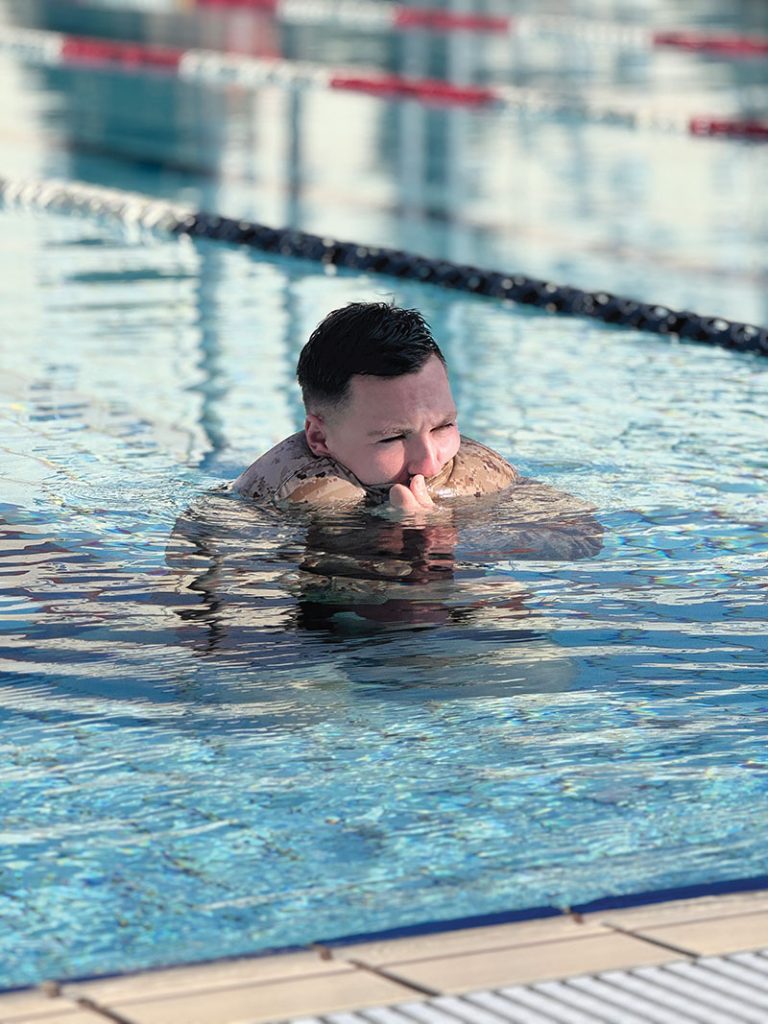
While MCCS Okinawa is designed and programmed for a combination of active military, their families, and certain civilians, the team remembers the core mission of preparing the troops for service.