
In its 105-year history, the Omaha Home for Boys has come a long way.
For starters, it crossed genders. What began as an orphanage for boys moved on to include girls about three decades ago. Since then, it has evolved as an institution, adopting a more holistic approach to helping at-risk youth and preserving families in trouble.
As understanding about underprivileged youth increased, it became clear that the home’s aquatics facility should play a role in fulfilling its more advanced mission, to help ensure the safety of its charges, as well as the community at large.
Expanded mission
The Omaha Home for Boys serves 850 to 1,200 unique clients each year, including children of all ages and families trying to stay together.
It does this with a focus on education, employment, housing, mental health, and life skills. More than 80% of those served live in households that earn less than $35,000 per year, while a full 58% live in deep poverty, with annual incomes less than $15,000.
“I would say our primary age groups are 14 to 26, but we also have programs that are working with parents to either get custody of their kids back because they’re in the foster care system, or preventing their kids from going into the foster care system,” says Brandy Gustoff, chief operating officer for Omaha Home for Boys.
In 2024 and 2023, the home began to open its pool to more people to have a greater impact, Gustoff says. “Just talking to our swim instructors and community partners, we learned the amount of people in foster care who didn’t have access to a pool and never learned how to swim. We really saw the need in our community.”
So recently, the management team undertook a significant expansion in its services.
Team Work = Dream Work
Management became aware of the disproportionate drowning rate among children from families of lesser income levels, so it wanted to increase exposure to swimming instruction and competitive swimming opportunities, for its own clients, as well as children in the neighborhood.
But they couldn’t do it on their own. They formed strategic partnerships with local organizations to accomplish this goal.
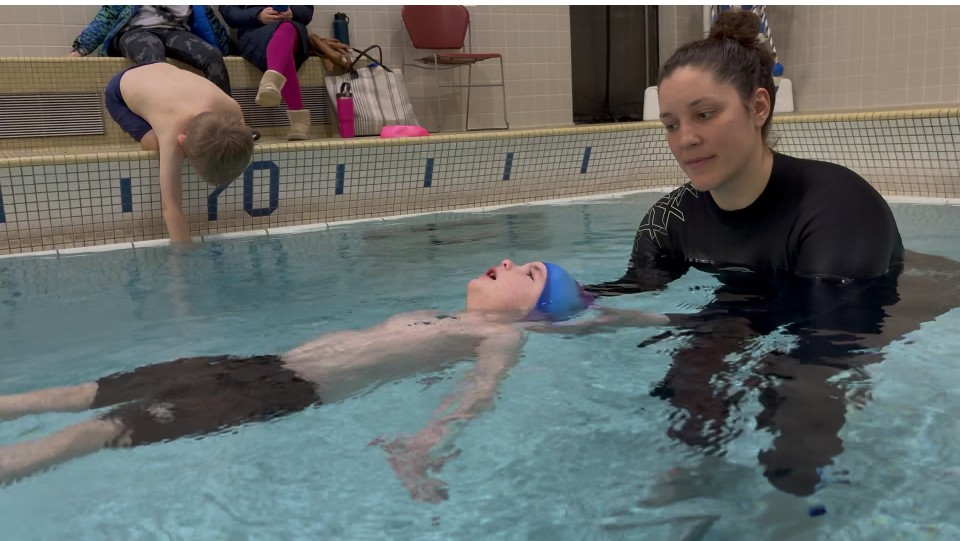
Face-Up First, an Omaha -based swimming school, gives free and low-cost lessons to hundreds of local youth at the center, including to children in foster care and those from low-income families.
The local ACE Swim Club, based in a local suburb, hosts practices at Omaha Home for Boys, treating the facility as one of its own locations. This created a new way for local children to participate in these activities. Otherwise, transportation and fees would present an obstacle for many.
“We can have more people in our immediate area able to access a swim club and do club swimming, which doesn’t exist in our areas,” Gustoff says. “That really opened up the opportunity for the young people in our neighborhoods.”
The team also wanted to make water safety and swimming instruction accessible to local children with differing abilities, such as those with Down Syndrome, on the autism spectrum, and those managing sensory processing disorders. To make this possible, another swim school, Omaha-based All-Inclusive Aquatics, provides adaptive swim lessons on site.
Finally, four high-school swim teams train at the facility.
Some of the swim instructors also come in on weekend nights to serve as lifeguards so the local children can enjoy free swim time at the pool. “A lot of young people in our program have never swum in a pool, and a lot of them don’t even know how to swim,” Gustoff says.