
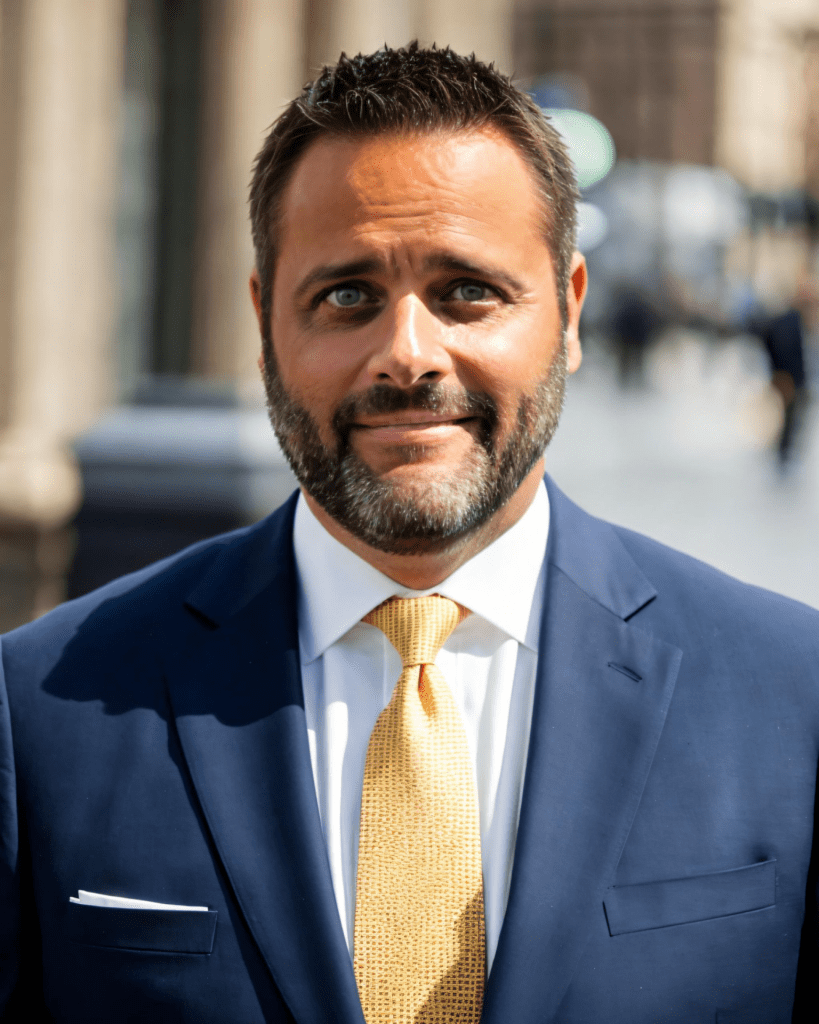
Everywhere Tyler Anderson has gone, those surrounding him have recognized his unique skill and found ways to leverage it.
In his career, he has worked in critical incident stress management for several airlines, employing the same methods as police and fire departments to help staff manage the aftermath of plane crashes and other traumatic events.
He still works for an airline in this capacity, traveling once or twice a month to help on-site.
But president of the International Lifeguard Critical Incidence Response Alliance [ILCIRA], headquartered in Cumberland, R.I., also has 25 years of aquatics experience. His career has included leadership positions at Six Flags Theme Parks, the American Red Cross, YMCA of the USA, Goldfish Swim Schools, and a number of pool-management companies. He is an American Red Cross Lifeguard Instructor Trainer and an Ellis & Associates Lifeguard Instructor.
Bringing the two together, he’s formed an organization that begins to answer a question over which the
lifeguarding segment has long struggled.
PREPAREDNESS GAP
During his time in aquatics, among the backdrop conversation acknowledging that lifeguards serve as
first responders but go unrecognized as such, Anderson noticed more immediately urgent conversations.
“I constantly saw on [social media] where aquatics directors were saying, ‘We’ve had an incident. What are we supposed to do with our staff?’ ” he remembers. “There wasn’t a good answer.”
He spoke with aquatics leaders who shared his concern. “It became apparent this was indeed a problem, and that it’s going to take many years to come up with good solutions because it is so new to the industry.”
In his pursuit of answers for the aquatics industry, Anderson formed ILCIRA to train aquatics professionals in critical incident stress management, or CISM [pronounced “sism”]. This approach pairs those who’ve experienced a trauma with peers who understand.
After going through a traumatic experience on the job, professionals tend to feel more comfortable with peers, not only because they share experiences and can speak each others’ language, Anderson says, but also because they feel safer: Somebody who’s gone through the experience probably won’t
judge any responses that an outsider might consider a mistake.
“Our goal is not to identify if they made a procedural error but to help them transition past [any errors],” Anderson says.
This doesn’t remove mental health professionals from the equation. Those experiencing more difficulty recovering may need to undergo specific therapies such as Eye Movement Desensitization and Reprocessing (EMDR). In such cases, he says, “we are there to say, ‘Let us help you find the best
professionals to help,’ ” Anderson says.
Right now, ILCIRA has about 25-30 aquatics professionals trained to CISM, but it expects to
grow exponentially by collaborating with larger organizations that can offer its training to members, or bigger companies that can bring the instruction in-house.
PROGRESS SO FAR
ILSIRA [pronounced like ill-SEAR-uh] recently embarked on a study with the Center for the
Advancement of Military and Emergency Services Research at Kennesaw State University in Georgia to determine how lifeguard experiences overlap those of EMTs, and what kinds of critical or traumatic
incidents they experience the most.
At the time of this writing, 1,000 individuals had participated in the International Aquatic
Personnel Critical Incident Prevalence and Impact Study. Any conclusions would be premature, since the study will be continued into summer, and it had been recently released on a more global scale, with Southern Hemisphere countries just beginning their swim season and beginning to respond.
However, certain patterns have begun to show themselves.
“Now that some of the preliminary data has come back, we see that many lifeguards experience this,” Anderson says. “There is plenty of data that lifeguards are experiencing these events — and they do several times, especially those with longer careers. I think it just helps us prove what we suspected in the aquatics industry — that lifeguards were experiencing the same thing as other first responders but haven’t had the resources.