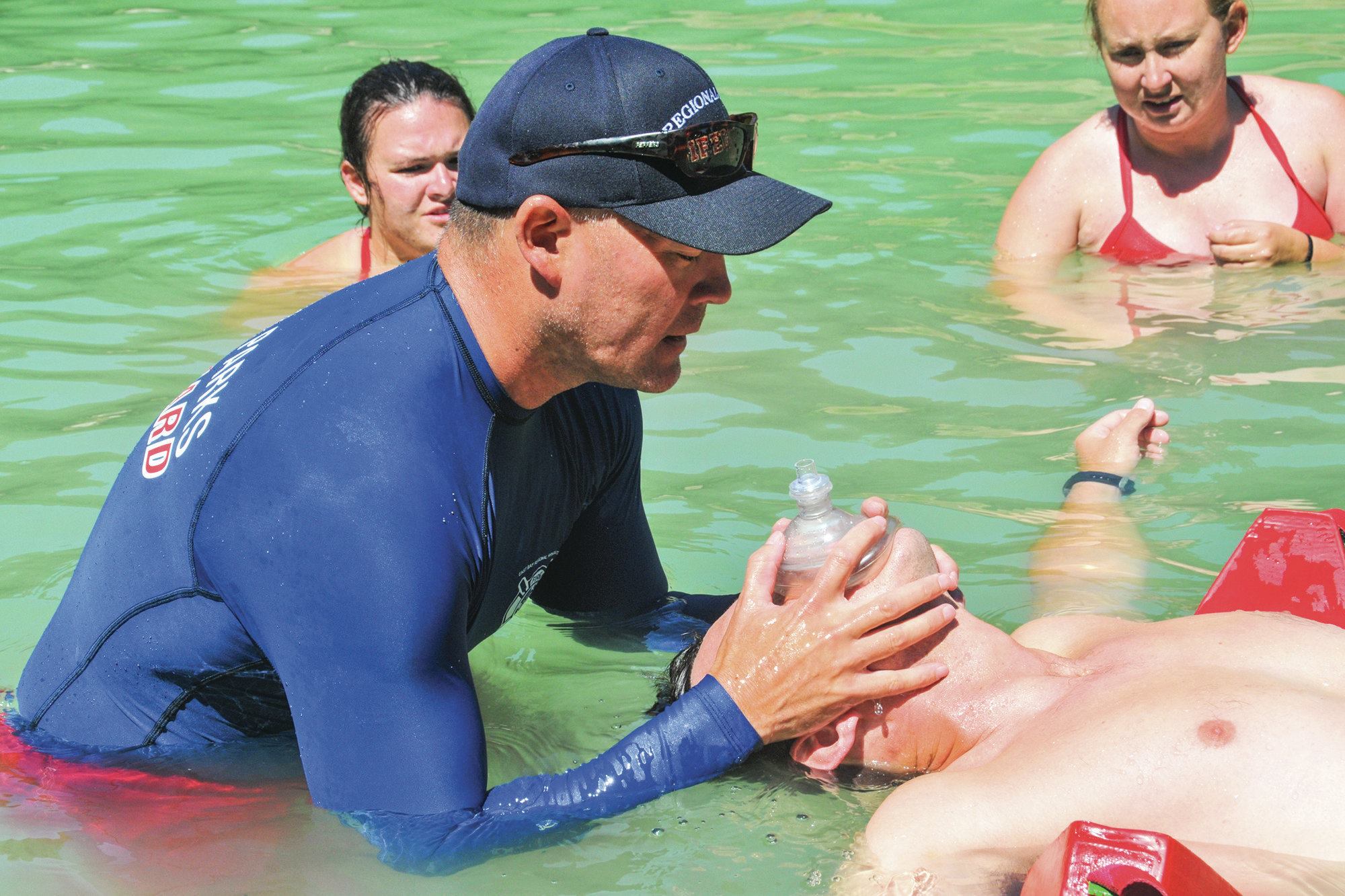
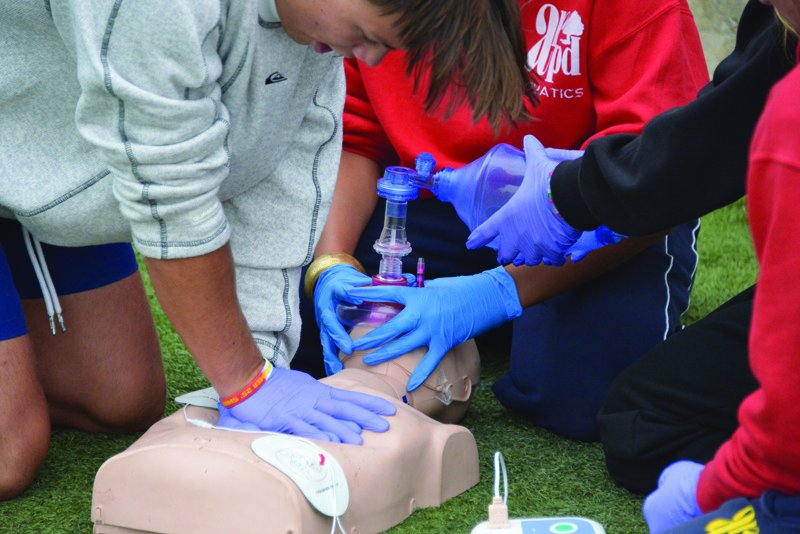
Ever feel constrained? Not enough time? Or there is just too much equipment for this week’s in-service training? Do you ever find yourself spending more time on setting up the scenario than training on it?
Consider going lean.
Focus on one or two areas of a rescue rather than the whole scenario. Remember: The goal is to have your lifeguards successful when it comes to rescues and emergencies. By improving on small, critical aspects of a lifesaving skill through rapid repetition, you’re improving your lifeguards’ ability to respond, rescue, and provide care quickly, efficiently, and synchronized.
Short and to the point is key.
The Lean In-service allows the trainer to identify gaps or rough spots that might require a new additional training block or a repeat of an existing block (skill refresher/polish). Below, I’ll discuss how to build an effective 15-minute in-service and provide two examples — one for water, the other for land — of in-service trainings using this model.
HOW TO BUILD YOUR 15-MINUTES
You can easily develop a 15-minute in-service using the basic structure that follows.
Let’s discuss the components for a short but impactful in-service.
Introduction
The introduction should provide the set-up and explanation of the first skill/activity. It should include visuals and/or a quick demonstration of what you expect from the lifeguards. Keep it brief: If you find yourself going over the time limit, think about ways to cut back on your verbiage, or what you want to see happen.
Remember that little steps get you to the larger outcome later on.
Skills
These blocks should focus on making improvements to one specific skill, which should be repeated multiple times to build muscle memory and meet the specific timing goal and the trainer’s benchmark. The timing goal should be used as an internal gauge for the trainer to help manage time for the in-service and assess the progress in the lifeguards’ ability to perform or respond to a task.
As the trainer, you should require a minimum of three reps within the skill block (one repetition per minute). Remember: Repetition builds muscle memory and skill proficiency. The more reps, the better. As the trainer works toward the time limit of the block, each skill should be a natural progression that builds off the previous one. This allows for a smooth, uninterrupted transition to the next skill block.
Each skill block should include benchmarks, which outline what the trainer hopes to achieve within the three minutes. This can include a specific skill that is acquired or a timing goal that is achieved.
Closing
Closing allows for the trainer to provide feedback to lifeguards regarding their skills, the trainer’s goal, and how the in-service aligns with overall job duties. This also can be used as a water break between two 15-minute in-services.
THINGS TO CONSIDER AS THE TRAINER
As the trainer, your critical eye is necessary to ensure lifeguards are meeting your benchmarks. Keep in mind the following so your in-service is successful:
Be mindful of your time management — it’s easy to go over the time limit.
It’s okay to repeat a skill block if necessary.
Less talk, more interaction: Keep your lifeguards engaged.
If you have to explain something, consider performing a visual demonstration, if possible.
Bringing lifeguards together for in-service takes a lot of time and energy, and it can be pricey. Maximize your interaction time with them and reap the benefits.
Good luck and keep training.