Parque Vidanta
Nuevo Vallarta, Nayarit, Mexico
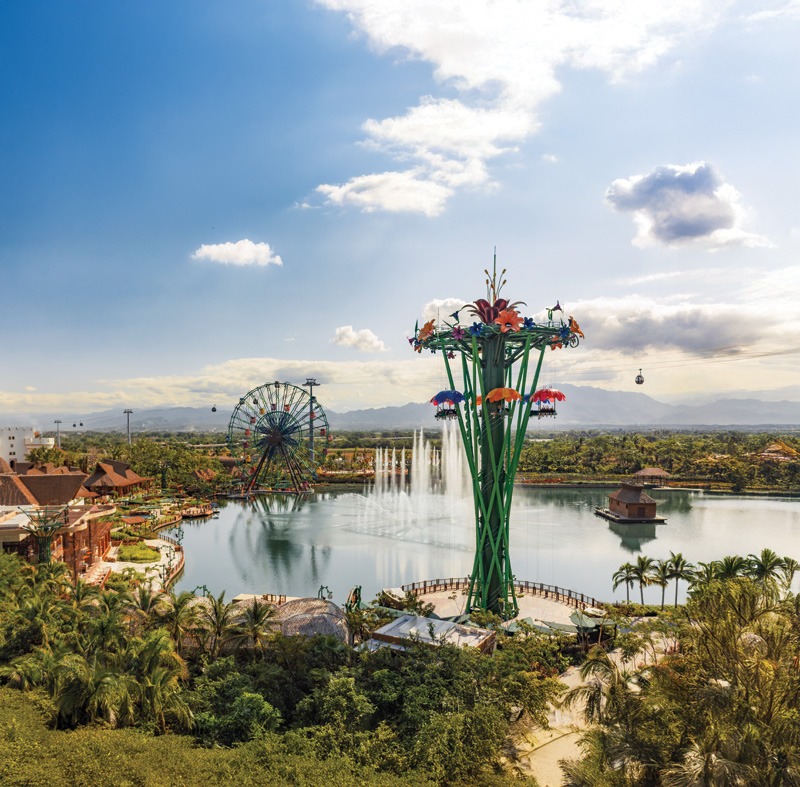
COURTESY GRUPO VIDANTA
- Architects: AHA Universo
- Aquatic Consultant/Designer: Cloward H2O
- Pool/Spa/Water Feature Contractor: Cloward H2O
- General Contractor: Grupo Vidanta
This water palette takes the role of aquatic elements to a new level.
The design team sought to use water as “connective tissue” between natural and built environments on Vidanta World, a complex of luxury resorts and tourist attractions.
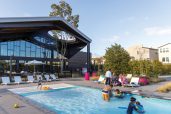
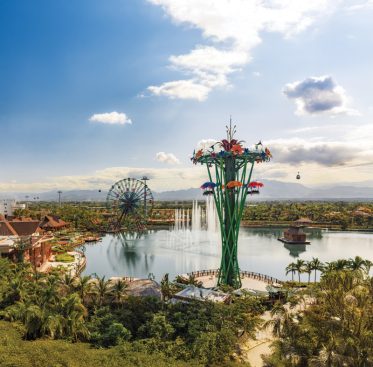
Water elements of every size, from intimate interactive features to massive engineered lagoons, are used to drive foot traffic and engagement throughout the property. By spreading these features across the acreage and framing them with plant life the designers created a sequence in which visitors discover one feature after another, developing a storyline. The layout serves to foster an appreciation and sense of stewardship toward nature, reinforced by lush plantings throughout.
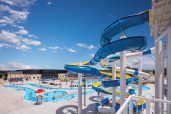
The experience is carefully mapped out. Visitors first interact with water at Celebration Lagoon at the pre-entry arrival zone. From there, they progress to a plaza featuring retail, dining, and entertainment spaces. This leads to the central space in the park, Enchanted Valley, which is surrounded by a waterfront featuring attractions, games, and a theater. Fantasy Gardens caters to children while, nearby, Discovery Jungle incorporates major attractions set within dense natural surroundings. Adventure Valley caters more to thrill seekers. Finally, the Garden Oasis provides calmer, more relaxing spaces.
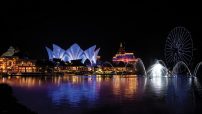
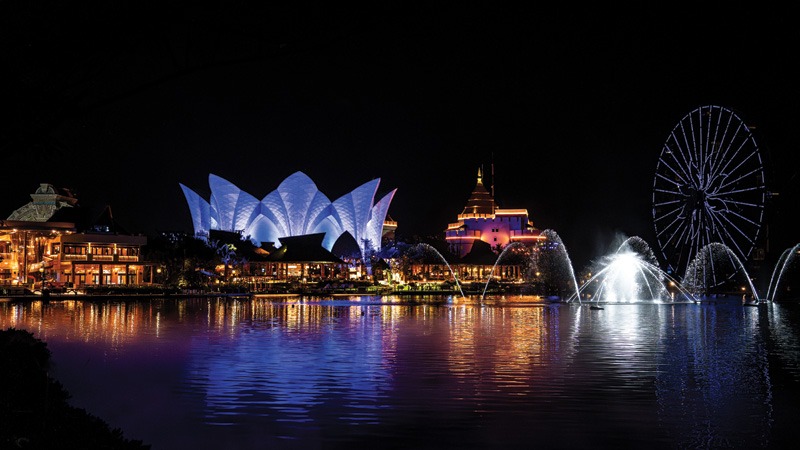
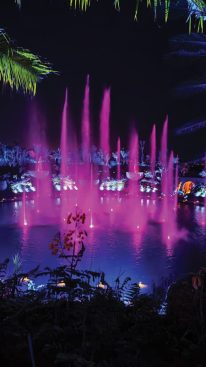
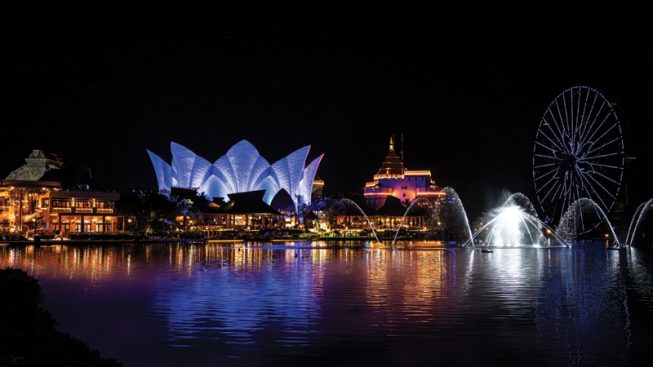
Not all the lake and canal systems were meant for human interaction. Some serve as transportation throughout the property, or provide scenic views and set the stage for shows involving performers, boats, jet skis, pyrotechnics, and water effects. This includes choreographed fountain systems with lighting, projections, and audio.
Water crossings, bridges, and pathways promote traffic and further blur the line between water and its surroundings.
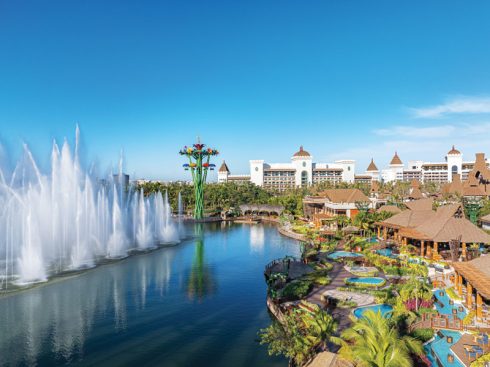
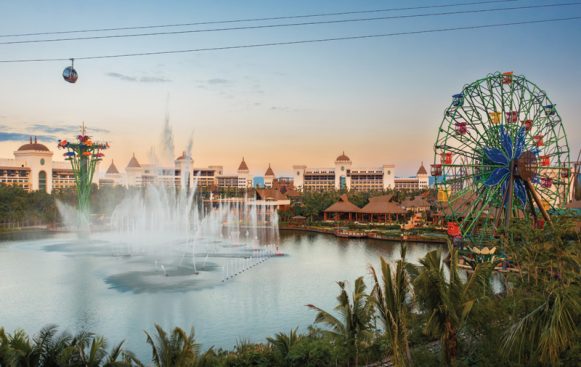
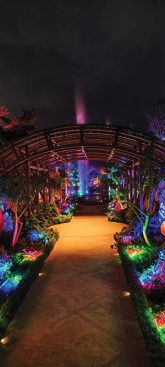
COURTESY GRUPO VIDANTA
Sustainability was also considered. The well-based water system uses fluctuating water levels to maximize rain capture and minimize runoff, thus blocking contaminants from the landscape. Water features are strategically placed to provide aeration, thereby enhancing circulation and preventing stagnation where needed.
A wetland-based filtration system is incorporated into the natural ponds and lagoons. Water enters through a wetland containing sand, gravel, and aquatic plants. The plants’ roots absorb excess nutrients, while bacterial colonies decompose organic material. Plants such as cattails, bulrushes, and reeds help remove nitrogen and phosphorus, preventing algae blooms. High-pressure sand filtration sifts out fine particles that make it through the wetlands. Ozone sanitation was chosen to kill bacteria and pathogens without chemical residues.
To facilitate water savings, the team implemented a number of strategies: Recirculation systems designed to minimize water loss; controlling evaporation through such methods as carefully placing the water elements, and using landscape as a buffer to reduce the impact of surface-to-air exposure; system zoning that allows water features to be shut off when demand and programming do not require them. Outside the ponds, lagoons, and pools, the landscape irrigation system is designed to reuse treated water.
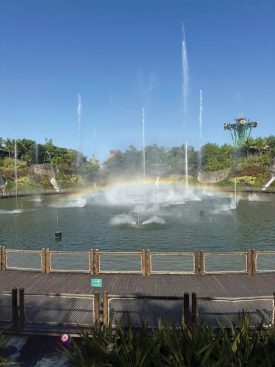
The vertical sprays not only provide the opportunity for choreographed water shows, but also help aerate the water and enhance circulation.
Multiple water elements draw visitors throughout the property.