A promotion from lifeguard to lead, pool manager, or deck supervisor can be exciting. Transitioning from employee to boss could include a new uniform, a desk with a computer, and a set of keys that open everything.
But with big change comes big challenges.
What are your responsibilities? What should you prioritize? How do you ensure that the lifeguard operation is effective? How do you make sure your lifeguards are seeing and doing what they’re supposed to? All good questions to ask yourself.
New supervisors should frame their mission: “Everyday, we strive to have all patrons and employees go home alive and uninjured: We constantly look for weakness and vulnerabilities within the operation. We constantly assess the effectiveness of our lifeguard’s surveillance. We constantly check our staff’s readiness.”
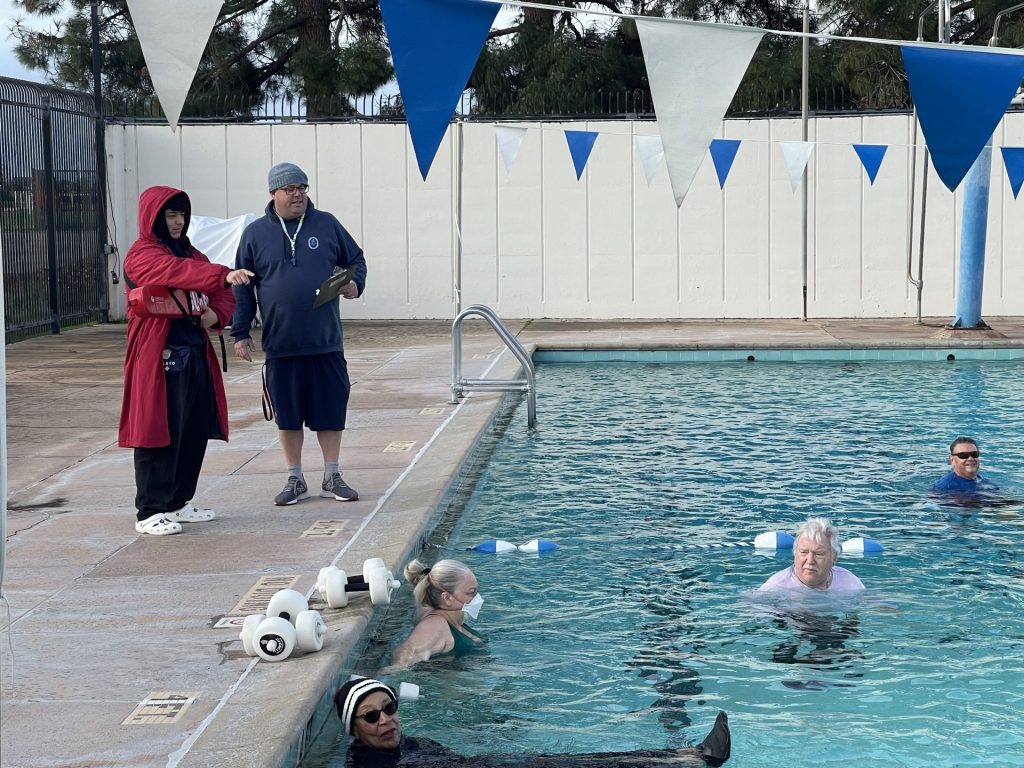
Lastly, we adapt to ensure the mission stays true. The industry doesn’t need any more supervisors who want to sit in their offices and watch videos from their phones or computers while their lifeguards provide surveillance. It’s not good enough to be a supervisor. The best leaders are active supervisors — those who walk, interact, guide, and support the operation during open hours.
Here’s what it looks like to work in service of this mission.
Pre-operations:
Looking for weaknesses and vulnerabilities
Before opening, the supervisor should verify that equipment and facility checks have been performed. This should include a physical walk-through to make sure everything is in working order. All broken equipment should be replaced, red-tagged, or cordoned off from the public. All necessary signage must be in its place and in view. Within the staging/break area, a diagram of zone coverage for all bodies of water should be posted and up to date. The day’s lifeguard rotation should be posted. The rotation board should have the names of all the lifeguards in their starting positions, and include positions in breaks and alternate stations. The length of time in each position should also be listed. Make sure to do a pre-opening briefing where you review zones, visiting groups, weather, and past hot-spot areas that might need additional support or modifications to the operation.
During operations:
Looking for weakness and vulnerability in the rotation
Once operation begins and before the rotation, the supervisor should verify that each lifeguard has taken the proper position at each station, understands their surveillance zone, and is searching the water for potential victims (surface, mid-depth, and bottom) effectively. If there is an immediate need to adjust the station or correct/remediate the lifeguard, the supervisor should do so.
Once the rotation begins, the supervisor should observe it in its entirety, from the first lifeguard initiating the rotation to the last lifeguard leaving it. Look at the overall rotation and verify that it is effective, meaning that surveillance of the water is uninterrupted during each lifeguard transition, whenever a lifeguard takes over a station, and when a lifeguard leaves a station. Also make sure that each lifeguard transition is smooth and efficient. It is imperative that the incoming lifeguard initiate the transition, not the outgoing.
The supervisor should be able to observe a clear hand-off of the station between the two lifeguards without any compromise or interruption in surveillance. The supervisor should document each transition.
If you notice a behavior or action by one or both lifeguards that needs adjustment, correction, or remediation, do so immediately.
The question might arise as to whether the supervisor should observe every rotation, and the answer is, “Yes.” This is a safety measure that a supervisor should do every day of operation. See the Supervisor Rotation Check-off.
During operations:
Assessing the effectiveness of the surveillance
As the supervisor, you should test the effectiveness of your lifeguard’s surveillance. How does one do this? When checking surveillance, you want to verify your lifeguards see everything you see, and that they have the ability to prioritize and differentiate between low-risk and high-risk activities occurring in the water.
To check on what your lifeguards are seeing, I would incorporate the Vigilant Voice. Developed by Terri Smith, of Water Design, Inc., Vigilant Voice is an activity where the lifeguard providing surveillance verbalizes everything they see as they scan their zone. The supervisor listens and takes notes of what the lifeguard verbalizes. Once the lifeguard has finished, the supervisor verbalizes what they
see within the same zone. The supervisor points out any differences. The lifeguard repeats the activity with the goal of seeing the same things that the supervisor saw.
NOTE: During this activity, you must provide a back-up lifeguard to perform uninterrupted surveillance of the zone while you do the assessment.
Once the supervisor feels confident that the lifeguard is seeing everything within their zone, they should begin to develop the lifeguard’s depth of surveillance knowledge.
This is about a person’s ability to see the larger picture, as well as to identify, predict, and prevent aquatic incidents. As the supervisor, your role is to assess and develop their knowledge base. This means your lifeguards understand the strengths and weaknesses of each zone; the areas, amenities, or waterfeatures that see the most traffic and the most rescues; and visibility issues such as where glare causes blind spots, and how visibility changes depending on the activity and number of patrons in the water. The lifeguard should reach a point where they can differentiate between normal patron behavior and high-risk activities, as well as identify and avert potential crises.
NOTE: Here again, you must provide a back-up lifeguard for uninterrupted coverage during this exercise.
As a best practice, this should be done every day throughout the hours of operation, with the goal of assessing every lifeguard multiple times during the season. The assessment should be documented and saved. (See the
Surveillance Assessment.)
Checking the staff’s readiness
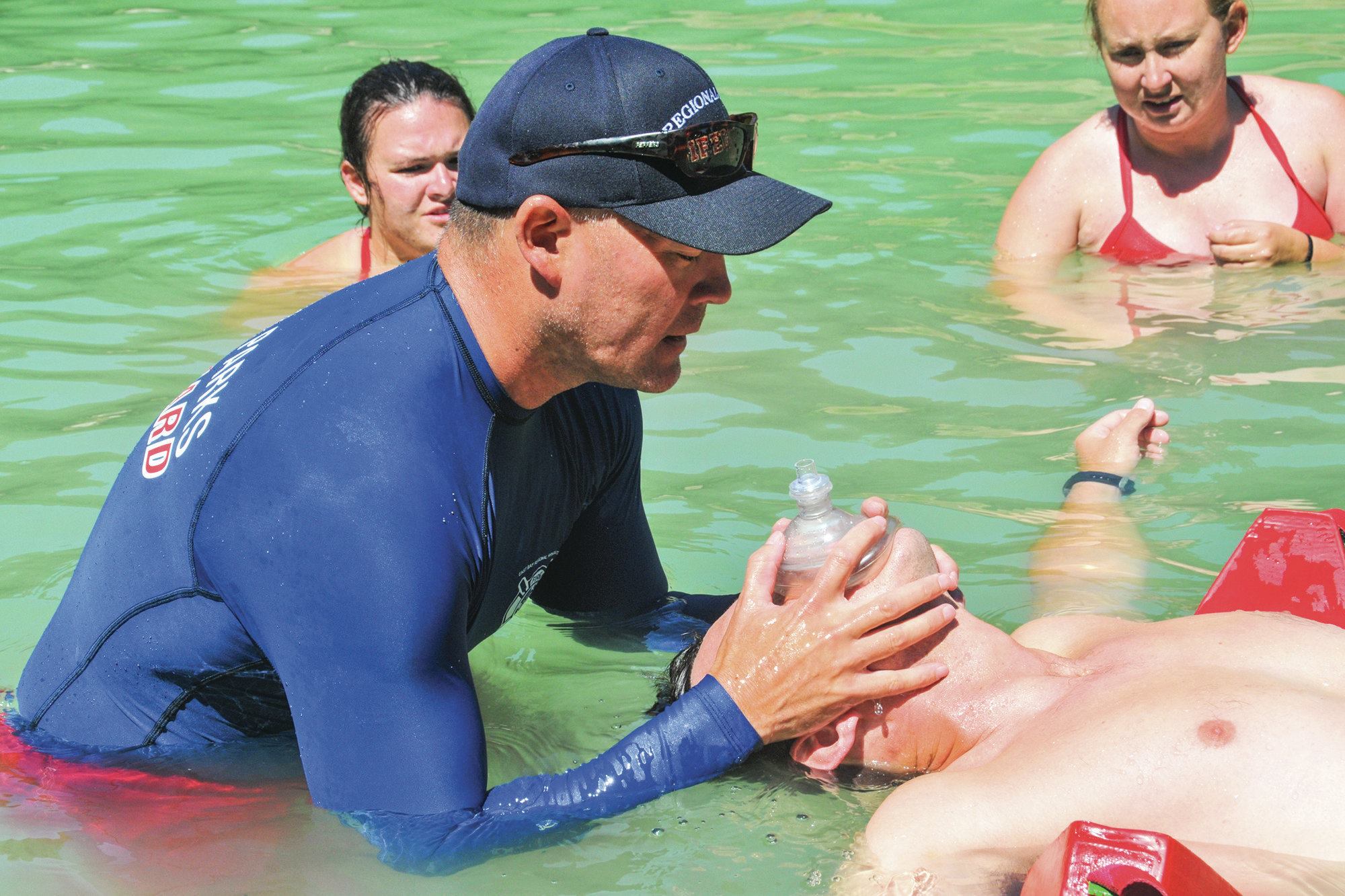
Checking your lifeguard’s ability to demonstrate lifesaving skills is imperative. This can be done throughout operation hours. This activity should focus on a handful of skills, both land- and water-based. The readiness check should take no more than three to five minutes, with the lifeguard being able to demonstrate the skill in 60 to 90 seconds.
See how your lifeguards can perform the following land skills:
• Stopping uncontrolled bleeding, up to the use of a tourniquet
• Rescue breathing for an infant, child, or adult
• Solo CPR for an infant, child, or adult
• Addressing conscious choking of an infant, child, or adult
• Assisting with unconscious choking for an infant, child, or adult
• Application of an AED
Assess lifeguards’ ability to perform these water skills:
• Active rescue on the surface, solo and team
• Passive rescue on the surface, victim face-down, solo
and team
• Passive rescue submerged, mid-depth, solo and team
• Passive rescue submerged, deep water, solo and team
• Rapid extrication of passive victim, solo and team
• In-water ventilations
As a best practice, readiness skill checks should be done every day throughout the hours of operation, with the goal of checking every lifeguard multiple times throughout the season. The readiness skill checks should be documented and saved to identify gaps in training (missing in-service days or vacations), which effect a lifeguard’s proficiency.
NOTE: You must provide an additional lifeguard for the team readiness skill checks. Also, any water skill should be done in a lifeguarded area.
Becoming a good supervisor requires consistency, patience, and a desire to excel to a higher standard. Lifeguards are first responders, requiring leaders who emulate what is needed to serve patrons and the community.
Good luck and keep training.